
How Jigsaw uses feedback and outcomes to improve care
How Jigsaw uses feedback and outcomes to improve care
How Jigsaw uses feedback and outcomes to improve care
At Jigsaw, we use feedback, outcome measures and service data to help us understand whether care is safe, helpful and making a difference for young people and families. This information supports conversations between young people, families and clinicians, helping to build a shared understanding of need, review progress over time and identify when a different approach may be needed.
We use a combination of recognised clinical measures, personal goals and feedback on service experience to build a fuller picture of care. No single questionnaire can capture everything that matters, so these measures are always considered alongside clinical judgement, the young person’s own views and the wider context of support. This helps Jigsaw improve the quality of care, respond earlier when progress is not on track, and keep learning at the centre of practice.
Why Jigsaw uses feedback and outcomes
Research suggests that when clinicians use outcome measures and feedback as part of care, this can support better clinical decision-making and is associated with improved outcomes for many young people.
Jigsaw uses feedback and outcome information for three main reasons:
- to understand whether support is helping
- to guide care and review progress, and
- to improve the quality and consistency of services.
This approach helps keep care focused on what matters to young people and families, while also supporting service learning and improvement.
How Jigsaw measures what matters
Jigsaw uses a small number of recognised tools to understand different aspects of care and progress.
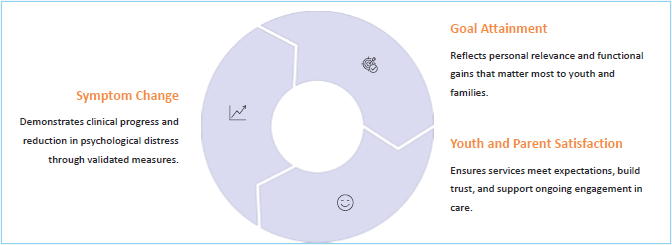
To understand emotional distress and symptoms, we use measures such as the CORE-YP, CORE-10, GAD-7 and PHQ-9. These help us understand areas such as general distress, anxiety and low mood, and whether these are changing over time.
To understand progress in areas that matter to the young person, we use Goal-Based Outcomes. This helps capture change in relation to the goals a young person wants to work towards. To understand the experience of care, we use Youth Satisfaction and Parent Satisfaction surveys. These help us understand whether support feels helpful, respectful and responsive.
Figure 1: shows the clinical outcomes framework used in Jigsaw (2025)
How this information is used
Measures are used at different points in care. At the start, they help build a shared understanding of a young person’s needs. During support, they help review progress and open up discussion about what is working and what may need to change. At the end of support, they help us reflect on outcomes and on the experience of care.
These tools are not used on their own. They support discussion and decision-making, but they do not replace professional judgement or the voice of the young person and family.
Quality, safety and effective care
This approach supports quality, safety and effective care in different ways.
It supports quality by helping Jigsaw understand whether care is responsive, respectful and centred on the needs of young people and families.
It supports effective care by helping us understand whether young people are experiencing changes in distress, anxiety, mood and progress towards their goals.
It supports safety by helping clinicians review progress, notice when additional attention may be needed, and use information alongside supervision, safeguarding and wider clinical governance processes.
Why these measures can be trusted
Jigsaw uses recognised measures that are widely used in mental health settings and supported by evidence on reliability, validity and sensitivity to change. This means they are considered useful tools for understanding symptoms, goals and experience over time.
At the same time, all measures have limits. A score on its own never tells the full story. For that reason, Jigsaw interprets outcome information in context, alongside clinical expertise, the young person’s own account, family perspectives where appropriate, and the wider picture of care.
What Jigsaw results show
Jigsaw uses outcome and feedback data to understand patterns of improvement, progress towards goals and experience of care across services. This includes changes in symptoms over time, progress on personal goals, and feedback from young people and parents on the quality of support they received.
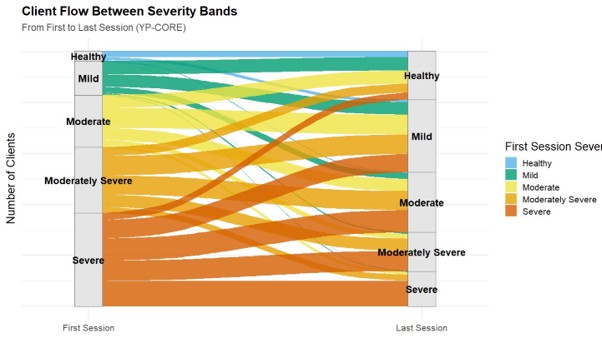
On average, six out of every ten young people show an improvement in psychological distress that is not down to random change. Nearly 8 out of every ten youth show improvements in the goals they set as part of their therapy in Jigsaw.
Figure 2: shows pre and post distress scores for youth aged 12-16 in 2024
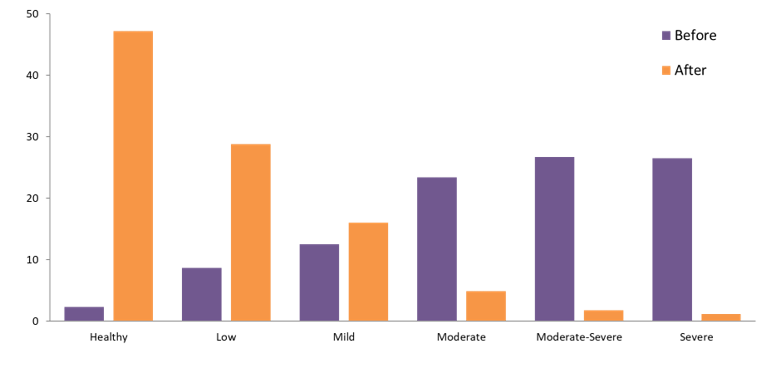
Figure 3: outcome transition Sankey diagram (2024)
In conclusion, Jigsaw uses feedback and outcome information to support safe, effective and person-centred care for young people and families.
By combining recognised measures with personal goals, service experience and clinical judgement, Jigsaw can better understand progress, respond when support needs to change and continue improving the quality of care across its services.
Jigsaw is a member of the Child Outcomes Research Consortium (CORC), which supports the use of outcome and feedback data across child and youth mental health services.