
Using data to support young people’s mental health: Introducing the HRB-funded PROACT project
Using data to support young people’s mental health: Introducing the HRB-funded PROACT project
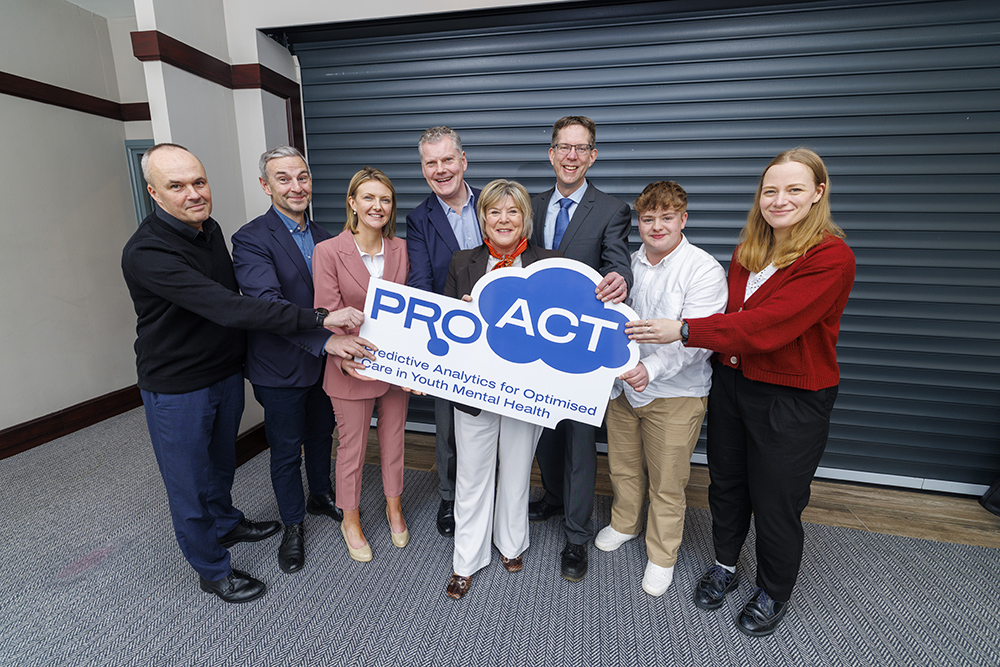
Every day across Ireland, young people reach out for help with their mental health.
Services like Jigsaw, the National Centre for Youth Mental Health, work to ensure that support is available when it is needed. But as demand continues to grow, services face an important challenge: making sure the right support reaches the right young person at the right time.
A new research project hopes to help with exactly that.
PROACT (Predictive Analytics for Optimised Care in Youth Mental Health) is a partnership between University of Limerick and Jigsaw, funded by the Health Research Board. The project will explore how modern data analysis can help youth mental health services better understand young people’s needs, plan services more effectively, and personalise the support they provide.
Put simply, PROACT is about learning from the information services already collect so that mental health supports can work better for young people.
Why this research matters
Across Ireland and around the world, more young people are seeking help for their mental health. Meeting this need requires services like Jigsaw to keep evolving, not only in how we deliver care, but in how we understand and anticipate it.
PROACT is the first study of its kind in Ireland to examine how advanced analytics can be used within youth mental health services to generate actionable real time insight from real-world service data.
By identifying patterns that are often difficult to detect in day-to-day practice, the project will explore how services can better anticipate demand, understand what works for different young people, and intervene earlier where there is a risk of disengagement.
The ambition is clear – we want to equip clinicians in Jigsaw with better intelligence so that young people can receive more safer, responsive and personalised support.
What the PROACT project will do
The research will focus on five main areas.
Predicting needs and demand
The project will explore how advanced data analysis techniques, including machine learning, can help predict mental health outcomes and identify patterns in how services are used. This could help services anticipate changes in demand, plan staffing more effectively, and respond more quickly when more young people need support.
Understanding young people’s needs
Researchers will analyse anonymised data to build a clearer picture of the needs of young people who access services. This includes looking at how young people find their way to mental health support and how they move through services. Understanding these pathways can help identify gaps in care and groups of young people who may need additional support.
Personalising support
Every young person’s experience of mental health is different. The project will examine how data can help tailor supports to individual needs. Over time, this could help clinicians understand which approaches are most likely to work for particular young people.
Testing tools for clinicians
The research will also explore how data insights could support clinicians in their day-to-day work. In one part of the project, clinicians will test a prototype decision-support tool that uses data insights to help guide personalised care. Their feedback will be essential to make sure any future tools are practical, useful, and aligned with clinical judgement.
Turning research into real-world impact
The final stage of the project will focus on sharing the findings with practitioners, policymakers, and services. The goal is to ensure that what is learned through the research can help improve youth mental health support across Ireland.
Dr Jeff Moore, Director of Research at Jigsaw said:
“At Jigsaw, we have made major investments in implementing a world-class electronic health record system because we believe better data leads to safe and more effective mental health care. PROACT allows us to combine that asset with world-class academic and clinical expertise to apply innovative analytic methods in a way that is grounded in real service need. This is about turning data into intelligence that supports clinicians, informs better decisions and helps deliver safer, personalised and effective care for young people.”
Protecting young people’s privacy
Protecting the privacy of young people is central to this project. All of the data used in the research will be fully anonymised. This means individual young people cannot be identified.
The aim is not to monitor individuals. Instead, the research looks at patterns across many cases so services can learn and improve over time.
A collaboration across disciplines
PROACT brings together people with expertise in mental health research, clinical practice, artificial intelligence, policy, and lived experience.
The research team includes Dr Ruth Melia, Associate Professor in Clinical Psychology at University of Limerick, Dr Jeff Moore, Director of Research at Jigsaw – The National Centre for Youth Mental Health, and Professor Pepijn Van de Ven, Professor of AI and Machine Learning at University of Limerick.
They are joined by Derek Chambers General Manager (Policy Implementation) at the National Mental Health Office, in HSE Access & Integration team along with youth advocates Jack Kirby and Eva Lenihan, who help ensure the voices and perspectives of young people remain central to the work.
Looking ahead
The long-term vision of the PROACT project is straightforward. It is about helping youth mental health services provide the right support the first time a young person seeks help.
By learning from data in a responsible way, the research aims to help services anticipate demand, reduce waiting times, identify young people who may need additional support, and plan services more effectively.
Ultimately, the goal is simple. When a young person reaches out for help, they should receive the support they need as quickly and effectively as possible.

Related news

Early Access: Run the VHI Women’s Mini Marathon with Team Jigsaw 💚
The VHI Women’s Mini Marathon is back on Sunday 31 May 2026, and it’s set to sell out faster than ever. Last year was one of the biggest events ye...
SEVEN ways to reset & improve well-being
Have you ever just needed a minute of calm? We all feel overwhelmed from time to time. Jigsaw’s Neart Programme have put together a guide of Top...

A youth-led vision for social media and mental health
At Jigsaw, we believe that the voices and lived experiences of young people must be at the heart of conversations about their mental health.