Sadbh is a teacher who sees firsthand the difference Jigsaw makes in young people’s lives.
What started as a COVID lockdown hobby has grown into something much more meaningful — a way to give back to the service that helps her students find their voice.
In this interview, Sadbh shares why she runs the VHI Women’s Mini Marathon for Jigsaw, what race day feels like, and why investing in young people’s mental health matters so much to her. From the magic of 30,000 women taking to Dublin’s streets together, to the small moments when a student regains their confidence — Sadbh’s passion for this cause shines through every word.
Whether you’re a seasoned runner or someone who’s never laced up a pair of trainers, Sadbh’s story might just inspire you to sign up. Because as she puts it: “Doing the Women’s Mini Marathon in aid of Jigsaw is an incredible experience because you know you are making a difference in young people’s lives.”
This year, on Thursday 28th May, we’re inviting friends, colleagues and brave supporters everywhere to abseil together for youth mental health.
With just 40 spots available, places are limited so we encourage you to sign up and start fundraising as soon as you can to avoid disappointment.
You’ll be abseiling from one of Ireland’s most iconic venues, The Hogan Stand at Croke Park, all while raising vital funds to support young people who are struggling with their mental health.
Why Abseil for Jigsaw?
Young people across Ireland are facing more pressure than ever — and too many are facing it alone.
When you abseil for Jigsaw, you’re helping provide free, confidential mental health support to young people aged 12–25, when they need it most.
What’s involved?
To secure your place:
Register for the Abseil for Jigsaw challenge here and pay your €50 deposit
Commit to raising €500 in vital funds for youth mental health
Take part on the day with full safety support from professional abseil instructors at adventure.ie
When you sign up, you’ll get:
A fundraising pack with everything you need to get started
Talking to teenagers can sometimes feel like trying to open a door that keeps closing.
Many parents want to support their young person, but they are not always sure how to start the conversation or keep it going.
In a recent webinar hosted by Jigsaw’s Neart Team, Dr. Kim Lombard spoke about practical ways parents can strengthen communication with their teens. Kim shared a simple framework built around four ideas that all begin with the letter “C”. These small shifts can help parents build stronger, more open relationships with their young people.
Start with self-compassion
Parenting a teenager can be challenging. It is normal to question your decisions or feel that you could have handled something differently.
Showing yourself compassion is an important starting point. This means treating yourself with the same kindness you would offer a friend in a similar situation. Instead of focusing on mistakes, try to recognise that parenting is a learning process.
When parents are kinder to themselves, it becomes easier to respond calmly and thoughtfully when challenges arise. This also creates space to reflect on situations and consider what might work differently next time.
Be curious, not judgemental
Curiosity can transform how conversations with teenagers unfold.
Sometimes, when a young person is struggling or acting out of character, our instinct can be to ask “What is wrong with you?” A more helpful question might be “What has gone wrong for you?”
This shift in language moves the focus from seeking to understanding. It shows your young person that you are interested in what they are experiencing rather than judging their behaviour.
Curiosity also applies to parents themselves. When a conversation does not go well, it can help to pause and reflect. Why did I react that way? What might I try differently next time?
This kind of reflection helps build stronger communication over time.
Focus on connection
Teenagers may seem more independent, but connection with trusted adults is still very important.
Being present and genuinely interested in what is happening in your young person’s world can help them feel safe opening up. This might be through small, everyday moments such as chatting in the car, walking the dog or sharing a meal.
The goal is not to have perfect conversations, but to create an environment where your young person feels heard and valued.
Move towards collaboration
When children are younger, parents naturally take on a strong leadership role to keep them safe and guide their decisions.
As young people move into their teenage years, they need more opportunities to practise making choices and navigating challenges. This means gradually shifting from directing to collaborating.
Working together to solve problems or think through decisions helps teenagers build confidence and independence. It also shows that you respect their views and trust them to play a role in shaping solutions.
Lead with compassion
Teenagers often face complex situations as they grow and develop. Responding with compassion can help them feel supported rather than criticised.
Compassion means acknowledging what your young person might be going through, listening to their perspective and helping them think about possible next steps.
Rather than rushing to fix the problem, the aim is to support them to find solutions that work for them and meet their needs.
Small changes can make a big difference
Talking to teenagers is not always easy, but small shifts in how we approach these conversations can have a powerful impact.
By practising self-compassion, staying curious, focusing on connection and working collaboratively, parents can help create a relationship where their young person feels understood, supported and able to open up.
And remember, there is no such thing as perfect parenting. What matters most is continuing to show up, listen and learn together.
These tips formed part of a webinar on Talking to Your Teen delivered as part of the Jigsaw’s Neart Programme for schools, in collaboration with the National Parents Council. To find out more about the programme and future webinars subscribe to the Neart newsletter through the button below.
Every day across Ireland, young people reach out for help with their mental health.
Services like Jigsaw, the National Centre for Youth Mental Health, work to ensure that support is available when it is needed. But as demand continues to grow, services face an important challenge: making sure the right support reaches the right young person at the right time.
A new research project hopes to help with exactly that.
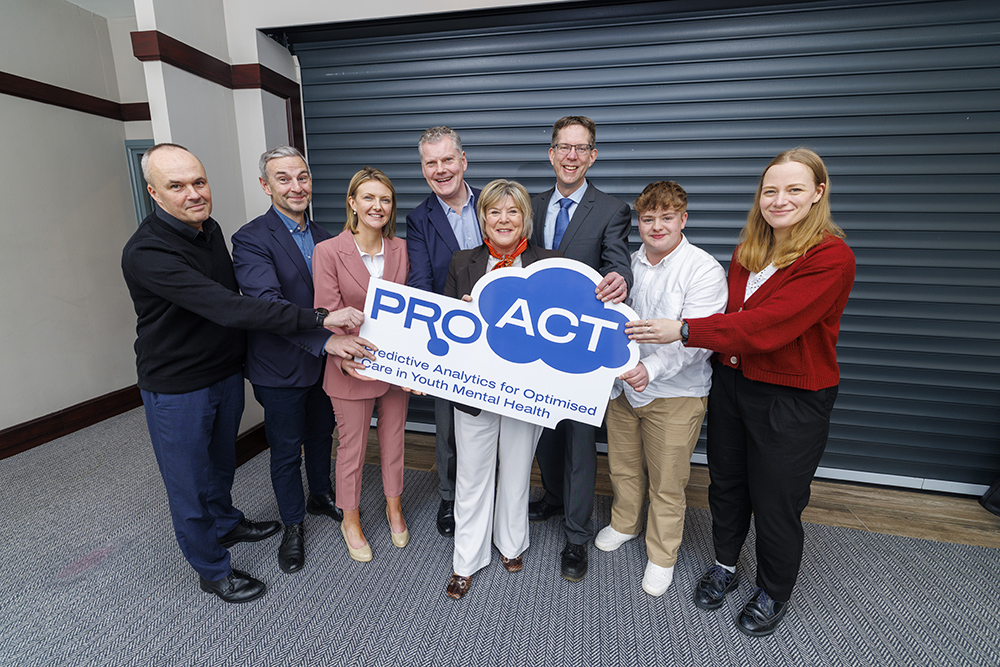
PROACT (Predictive Analytics for Optimised Care in Youth Mental Health) is a partnership between University of Limerick and Jigsaw, funded by the Health Research Board. The project will explore how modern data analysis can help youth mental health services better understand young people’s needs, plan services more effectively, and personalise the support they provide.
Put simply, PROACT is about learning from the information services already collect so that mental health supports can work better for young people.
Why this research matters
Across Ireland and around the world, more young people are seeking help for their mental health. Meeting this need requires services like Jigsaw to keep evolving, not only in how we deliver care, but in how we understand and anticipate it.
PROACT is the first study of its kind in Ireland to examine how advanced analytics can be used within youth mental health services to generate actionable real time insight from real-world service data.
By identifying patterns that are often difficult to detect in day-to-day practice, the project will explore how services can better anticipate demand, understand what works for different young people, and intervene earlier where there is a risk of disengagement.
The ambition is clear – we want to equip clinicians in Jigsaw with better intelligence so that young people can receive more safer, responsive and personalised support.
What the PROACT project will do
The research will focus on five main areas.
Predicting needs and demand
The project will explore how advanced data analysis techniques, including machine learning, can help predict mental health outcomes and identify patterns in how services are used. This could help services anticipate changes in demand, plan staffing more effectively, and respond more quickly when more young people need support.
Understanding young people’s needs
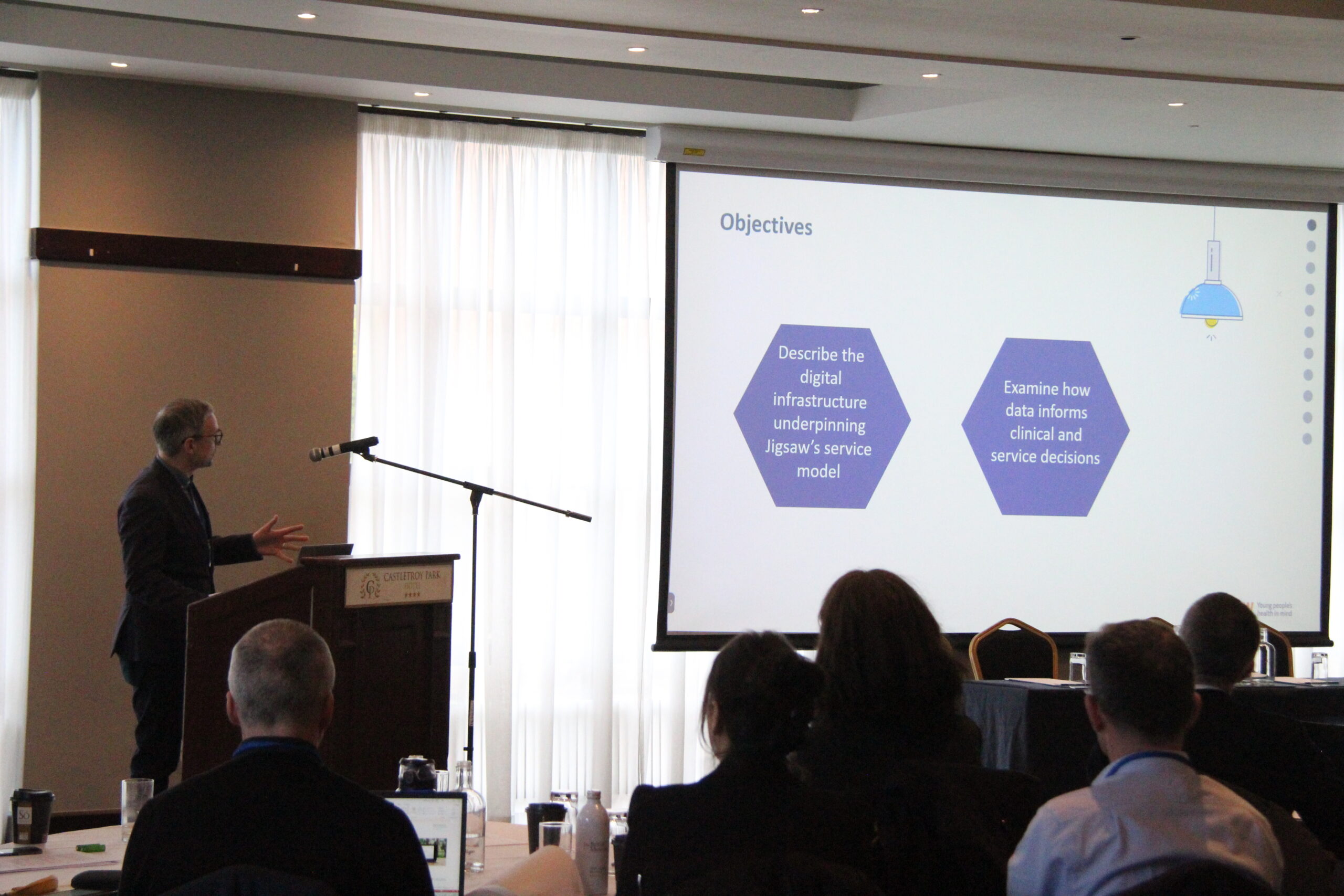
Researchers will analyse anonymised data to build a clearer picture of the needs of young people who access services. This includes looking at how young people find their way to mental health support and how they move through services. Understanding these pathways can help identify gaps in care and groups of young people who may need additional support.
Personalising support
Every young person’s experience of mental health is different. The project will examine how data can help tailor supports to individual needs. Over time, this could help clinicians understand which approaches are most likely to work for particular young people.
Testing tools for clinicians
The research will also explore how data insights could support clinicians in their day-to-day work. In one part of the project, clinicians will test a prototype decision-support tool that uses data insights to help guide personalised care. Their feedback will be essential to make sure any future tools are practical, useful, and aligned with clinical judgement.
Turning research into real-world impact
The final stage of the project will focus on sharing the findings with practitioners, policymakers, and services. The goal is to ensure that what is learned through the research can help improve youth mental health support across Ireland.
Dr Jeff Moore, Director of Research at Jigsaw said:
“At Jigsaw, we have made major investments in implementing a world-class electronic health record system because we believe better data leads to safe and more effective mental health care. PROACT allows us to combine that asset with world-class academic and clinical expertise to apply innovative analytic methods in a way that is grounded in real service need. This is about turning data into intelligence that supports clinicians, informs better decisions and helps deliver safer, personalised and effective care for young people.”
Protecting young people’s privacy
Protecting the privacy of young people is central to this project. All of the data used in the research will be fully anonymised. This means individual young people cannot be identified.
The aim is not to monitor individuals. Instead, the research looks at patterns across many cases so services can learn and improve over time.
A collaboration across disciplines
PROACT brings together people with expertise in mental health research, clinical practice, artificial intelligence, policy, and lived experience.
The research team includes Dr Ruth Melia, Associate Professor in Clinical Psychology at University of Limerick, Dr Jeff Moore, Director of Research at Jigsaw – The National Centre for Youth Mental Health, and Professor Pepijn Van de Ven, Professor of AI and Machine Learning at University of Limerick.
They are joined by Derek Chambers General Manager (Policy Implementation) at the National Mental Health Office, in HSE Access & Integration team along with youth advocates Jack Kirby and Eva Lenihan, who help ensure the voices and perspectives of young people remain central to the work.
Looking ahead
The long-term vision of the PROACT project is straightforward. It is about helping youth mental health services provide the right support the first time a young person seeks help.
By learning from data in a responsible way, the research aims to help services anticipate demand, reduce waiting times, identify young people who may need additional support, and plan services more effectively.
Ultimately, the goal is simple. When a young person reaches out for help, they should receive the support they need as quickly and effectively as possible.
Sign up to our newsletter
Keep up to date with what’s going on with young people’s mental health in Ireland