
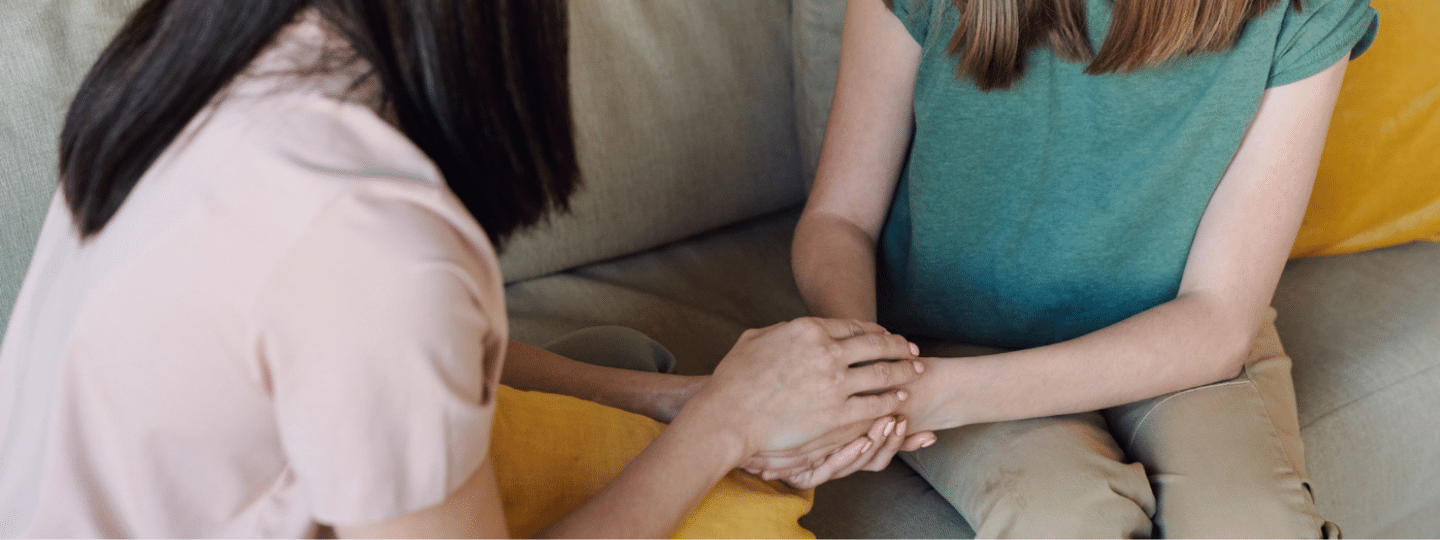
As a parent or guardian, hearing about young people harming themselves can be really alarming and difficult to understand.
If you suspect that your young person is harming themselves, there is a lot you can do to support them.
As a parent or guardian, hearing about young people harming themselves can be really alarming and difficult to understand.
If you suspect that your young person is harming themselves, there is a lot you can do to support them.
We live in a competitive world, where comparison is everywhere. It’s often present in school or college, on the sports field or in relation to social status.
There can be a focus on ‘being the best’ when we are ranked and compared to those around us.
At school or in college there is often competition, with exams designed to assess our academic ability. Ratings can be compared to every other person our age in Ireland.
Sports can come with pressure and a focus on winning. Even in non-competitive activities, such as the gym, we are encouraged to try to get a ‘personal best’. We might focus on doing more weights or improving our time, in competition with ourselves to be our best.
Online and on social media, we can usually see how many followers/friends, likes, or comments another person receives. We often compare our social media stats to those of others. Looking at posts and wondering why some got more support than others can become a habit. What stories are we telling ourselves about success and failure?
Life can feel full of pressure sometimes. Especially while we figure out who we are, what we want, and how we want our lives to be.
Young people who come to Jigsaw often talk to us about the pressure they’re feeling. Some of the things they feel pressure from include: