Jigsaw
Search Jigsaw

Jigsaw Wicklow engages local Councillors to champion youth mental health

At Jigsaw, we are committed not only to supporting young people directly, but also to advocating for stronger systems, better access, and lasting change in youth mental health.

Recently, our team in Wicklow brought that commitment into a key local decision-making space through a deputation to Wicklow County Council’s Bray Municipal District—an engagement that has also been recognised in local media.

Bringing youth mental health to local decision-makers

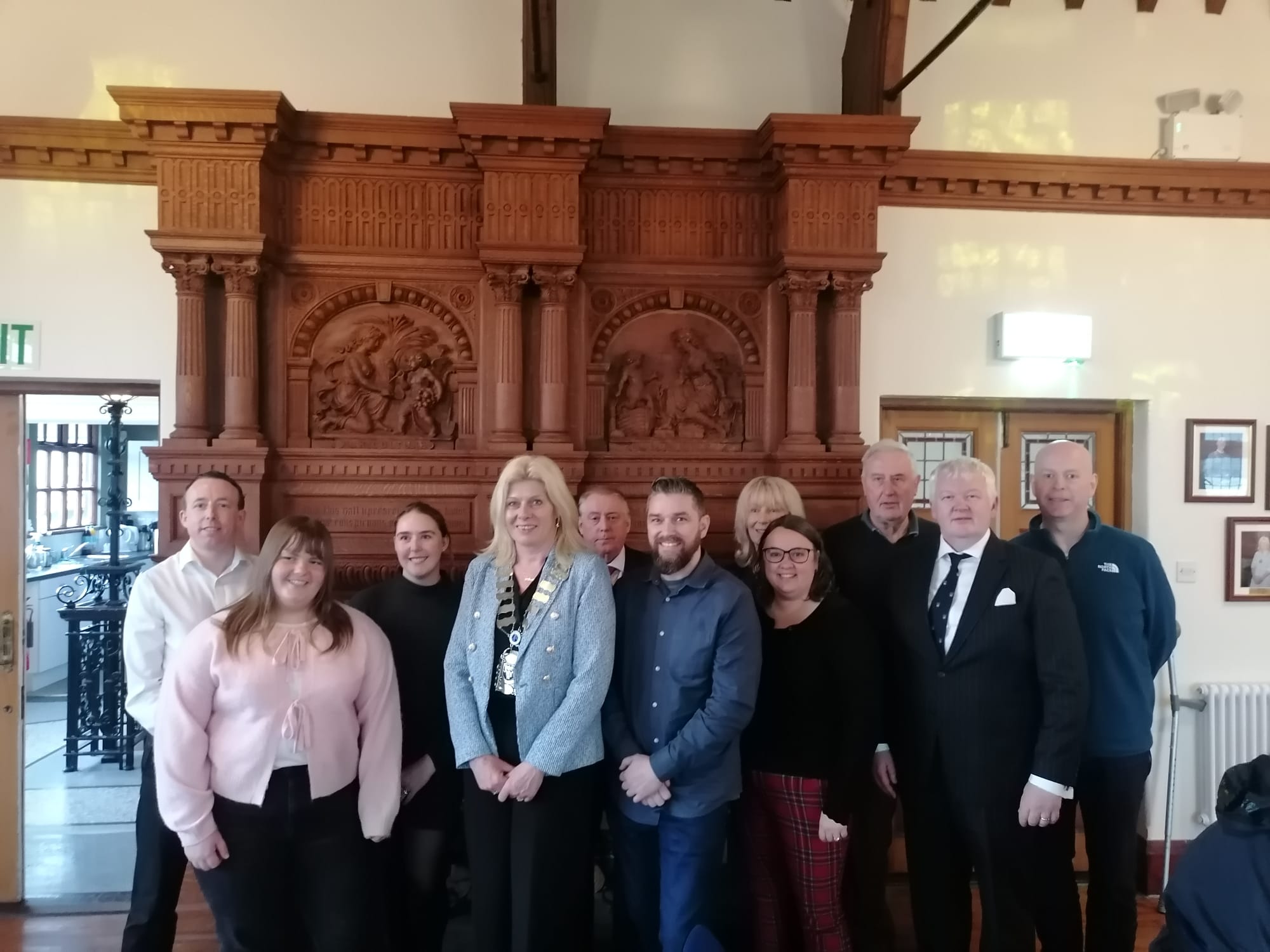
Youth Community Engagement Worker, Adam Burke, alongside Senior Clinician Clara O’Shea Collins and Youth Advocate Ceoladh Fenlon, presented an overview of Jigsaw Wicklow’s work and our key advocacy priorities to local councillors.

The meeting was chaired by Councillor Melanie Corrigan and attended by councillors Ned Whelan, Malachai Duddy, Joe Behan, Ian Neary and Caroline Winstanley, council staff, local press and members of the public.

The deputation had been organised by Cllr Erika Doyle, Green Party Councillor for Bray East and Cathaoirleach of Bray Municipal District, who unfortunately was unable to attend on the day due to illness.

Responding to growing need

As outlined during the presentation—and reflected in recent coverage in the Irish Independent—demand for youth mental health support continues to grow, with services facing sustained pressure from a range of factors impacting young people’s wellbeing.

Our team shared the impact of their work in Wicklow:

  • Over 400 young people completing therapy in 2025
  • Reduced waiting times through our single-session model
  • More than 3,000 people reached through workshops in the past two years
  • Continued expansion of early intervention and prevention work across communities.

These insights helped ground the discussion in both the scale of need and the effectiveness of early intervention models.

Councillors show strong support

The response from councillors was overwhelmingly positive, with clear recognition of both the need for youth mental health services and the impact of Jigsaw’s approach.

As reported locally, there was a shared understanding among elected representatives of the “unprecedented demand” facing youth mental health supports, alongside strong backing for early intervention services like Jigsaw.

Councillors also spoke about the value of community-based, youth-friendly supports and the importance of ensuring young people can access help early—before difficulties escalate.

Centred on youth voice

A key strength of the engagement was the inclusion of youth voice. Ceoladh Fenlon’s contribution brought lived experience into the room and highlighted the importance of meaningful youth participation in shaping services.

This reflects a core principle of Jigsaw’s work—“nothing about us, without us”—ensuring that young people are not just recipients of services, but active contributors to how they are designed and delivered.

Building on local partnerships

The discussion also acknowledged the role of strong local partnerships in supporting youth mental health in Wicklow, including community initiatives and long-standing advocates who have championed this work over many years.

These connections remain central to how Jigsaw operates—working collaboratively with communities, schools and local stakeholders to build a more supportive environment for young people.

From conversation to action

Importantly, the deputation was not simply a presentation—it was the beginning of an ongoing dialogue.

Councillors expressed a willingness to stay engaged, with interest in visiting the local Jigsaw service and continuing discussions around the practical steps needed to strengthen support for young people in the area.

Why local advocacy matters

Engaging with local representatives is a vital part of delivering on Jigsaw’s mission. It allows us to:

  • Highlight emerging needs within communities
  • Share evidence of what works in early intervention
  • Advocate for accessible, youth-friendly services
  • Ensure youth voice is heard where decisions are made

Encouraging collective action

The experience in Wicklow shows that local advocacy can be both constructive and impactful. By bringing together data, practice, and youth voice, it is possible to build understanding—and momentum—for change.

We would encourage services and organisations across the country to explore similar opportunities to engage with local decision-makers. These conversations matter, and they can help shape more responsive, supportive systems for young people.

Looking Ahead

This engagement marks an important step in ongoing advocacy efforts. With strong support from local representatives and a shared recognition of the challenges facing young people, we look forward to continuing this work—ensuring that youth mental health remains a priority at every level.

PHOTO CAPTION: L – R: Ian Neary (Independent Ireland), Ceoladh Fenelon (Jigsaw Wicklow Youth Advocate), Clara O Shea Collins (Jigsaw Wicklow Senior Clinician), Melanie Corrigan (Fine Gael), Joe Behan (Independent), Adam Burke (Jigsaw Wicklow YCEW), District manager Jackie Carroll, Caroline Winstanley (Soc Dems), Edward Whelan (Fine Gael), Malachai Duddy (Non- Party) A/District Executive Engineer Stephen Fox.


 

We need your help – to shape the future of youth mental health services

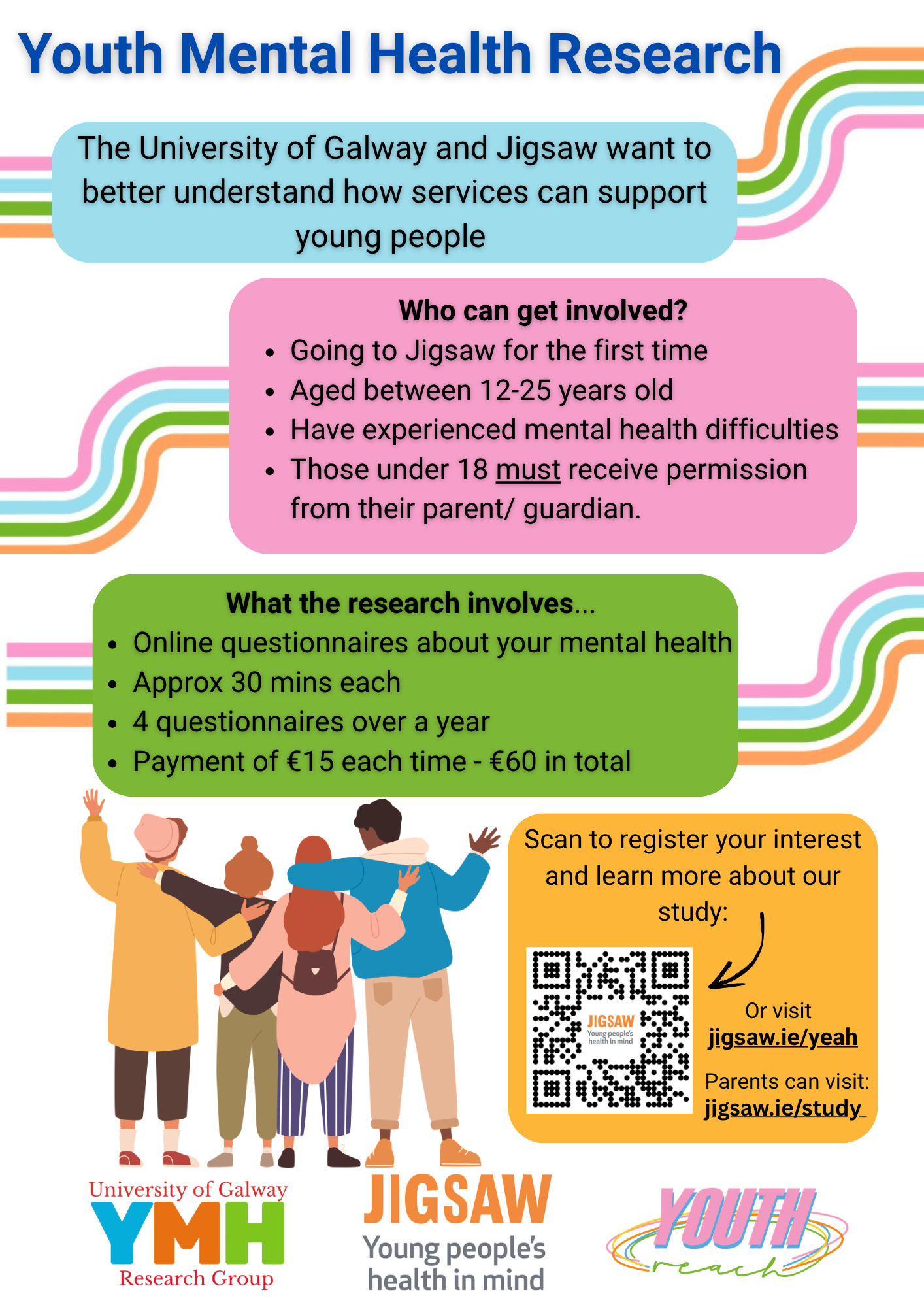
If you are coming to Jigsaw for the first time, we’re inviting you to help improve mental health services for young people.

Jigsaw is taking part in an important EU‑funded research study called YOUTHreach, led by the University of Galway. To make this research meaningful, we need to hear directly from young people and families at the very start of their journey with our service.

Who we are looking for

We are currently inviting:

  • Going to Jigsaw for the first time
  • Aged between 12 and 25

Those under 18 will need the consent of their parent or carer.


Why your participation matters

Your experience at the beginning of using Jigsaw is incredibly important.

By taking part, you can:

  • Help us understand what it’s really like to start using a mental health service
  • Shape how Jigsaw and similar services are delivered in the future
  • Contribute to research that will improve supports for young people across Ireland and Europe

Quite simply — your voice can help make services better for others.

What taking part involves

If you’re invited, the research team from the University of Galway will explain everything clearly before you decide.

Taking part includes:

  • Four online interviews, each about 30 minutes long
  • Flexible times that suit you and your family
  • A €60 payment to thank you for your time

For young people under 18, a parent or carer will also need to give consent.

Important to know

  • Taking part is completely voluntary
  • Saying yes or no will not affect your care at Jigsaw
  • Everything you share is confidential and handled securely

A message from Jigsaw

Dr Jeff Moore, Director of Research at Jigsaw, says:

“By taking part, young people have an opportunity to share their experience and help improve youth mental health services for others. Participation is voluntary, confidential, and separate from the care provided by Jigsaw.”

Will you help?

If you are invited to take part — and feel comfortable doing so — we strongly encourage you to consider it.

We need your help to improve youth mental health services for the future.


Helping young people navigate big feelings: the PEARL research project

When a young person is struggling, it can show up in ways that are hard to name – snapping over small things, withdrawing, sleeplessness, worry that won’t switch off, or emotions that feel suddenly “too much”. For parents and caregivers, those moments can bring a mix of concern, confusion, and a very human question: What’s the right thing to do here?

That’s the heart of PEARL, a new research project being developed through a partnership between the Univeristy of Limerick and Jigsaw. PEARL is focused on understanding the role emotion regulation can play in supporting positive mental health for young people and the adults who care for them.

What do we mean by “emotion regulation”?

Emotion regulation doesn’t mean never getting upset, or trying to “fix” feelings. It refers to how we notice, make sense of, and respond to emotions, especially when they’re intense. For young people, emotion regulation skills can shape how they cope with stress, conflict, disappointment, and change. For parents and caregivers, emotion regulation also matters because staying present in a difficult moment, even when you’re worried, can help a young person feel safer and less alone.

PEARL’s research focus is simple and important: how can we better support emotion regulation in young people, and how can parents be supported to play a positive role in that process?

What is PEARL?

PEARL stands for Promoting Emotion Regulation and Positive Mental Health in Adolescents Through Leveraging Parental Engagement. In practice, the project aims to develop and pilot a digital, scalable, emotion-focused parenting programme designed to support young people’s emotion regulation and promote positive mental health.

A key part of PEARL is its focus on parental engagement, not as an add-on but as a meaningful part of prevention and early support. Many parents want to help, but don’t always have practical tools or guidance that feel relevant to everyday life. PEARL is exploring what support for parents can look like when it’s designed to be accessible, realistic, and grounded in what families are actually experiencing.

Built with families, not just for them

One of the most valuable features of PEARL is its participatory co-design approach. That means the programme won’t be developed in isolation. Instead, it will be shaped with input from:

  • young people (aged 12–25)
  • parents/primary caregivers
  • and professionals working in youth mental health and family support

This approach matters because families aren’t one-size-fits-all. Language, format, and practicality make a huge difference to whether support feels usable—especially when life is already busy or stressful. Co-design helps ensure the programme is meaningful, accessible, and informed by lived experience.

Right now, the research team is running a series of consultations with parents, young people, and professionals to help guide the development of the programme.

A partnership between research and frontline practice

PEARL is being led by PhD researcher Sarah O’Leary in the Department of Psychology at the University of Limerick. The work is supervised primarily by Professor Jennifer McMahon (Head of Department of Psychology, UL), with collaboration from Professor Siobhán Howard (UL). It’s delivered in partnership with Jigsaw, with involvement from Dr Jeff Moore (Research Director, Jigsaw Ireland) and Fiona Hughes (Regional Clinical Manager, Jigsaw Ireland).

This collaboration brings together academic expertise and the reality of frontline youth mental health work—so the research stays connected to what matters in practice.

Abseil for Jigsaw and take a stand for Youth Mental Health

This year, on Thursday 28th May, we’re inviting friends, colleagues and brave supporters everywhere to abseil together for youth mental health. 

With just 40 spots available, places are limited so we encourage you to sign up and start fundraising as soon as you can to avoid disappointment. 

You’ll be abseiling from one of Ireland’s most iconic venues, The Hogan Stand at Croke Park, all while raising vital funds to support young people who are struggling with their mental health. 

Why Abseil for Jigsaw? 

Young people across Ireland are facing more pressure than ever — and too many are facing it alone.   

When you abseil for Jigsaw, you’re helping provide free, confidential mental health support to young people aged 12–25, when they need it most. 

What’s involved? 

To secure your place: 

  • Register for the Abseil for Jigsaw challenge here and pay your €50 deposit 
  • Commit to raising €500 in vital funds for youth mental health 
  • Take part on the day with full safety support from professional abseil instructors at adventure.ie 

When you sign up, you’ll get: 

  • A fundraising pack with everything you need to get started 
  • Your own iDonate fundraising page 
  • Ongoing support from the Jigsaw fundraising team 
  • A check mark off your bucketlist! 


Trouble talking to your teen? Four small shifts that can make a big difference

Talking to teenagers can sometimes feel like trying to open a door that keeps closing.

Many parents want to support their young person, but they are not always sure how to start the conversation or keep it going.

In a recent webinar hosted by Jigsaw’s Neart Team, Dr. Kim Lombard spoke about practical ways parents can strengthen communication with their teens. Kim shared a simple framework built around four ideas that all begin with the letter “C”. These small shifts can help parents build stronger, more open relationships with their young people.

Start with self-compassion

Parenting a teenager can be challenging. It is normal to question your decisions or feel that you could have handled something differently.

Showing yourself compassion is an important starting point. This means treating yourself with the same kindness you would offer a friend in a similar situation. Instead of focusing on mistakes, try to recognise that parenting is a learning process.

When parents are kinder to themselves, it becomes easier to respond calmly and thoughtfully when challenges arise. This also creates space to reflect on situations and consider what might work differently next time.

Be curious, not judgemental

Curiosity can transform how conversations with teenagers unfold.

Sometimes, when a young person is struggling or acting out of character, our instinct can be to ask “What is wrong with you?” A more helpful question might be “What has gone wrong for you?”

This shift in language moves the focus from seeking to understanding. It shows your young person that you are interested in what they are experiencing rather than judging their behaviour.

Curiosity also applies to parents themselves. When a conversation does not go well, it can help to pause and reflect. Why did I react that way? What might I try differently next time?

This kind of reflection helps build stronger communication over time.

Focus on connection

Teenagers may seem more independent, but connection with trusted adults is still very important.

Being present and genuinely interested in what is happening in your young person’s world can help them feel safe opening up. This might be through small, everyday moments such as chatting in the car, walking the dog or sharing a meal.

The goal is not to have perfect conversations, but to create an environment where your young person feels heard and valued.

Move towards collaboration

When children are younger, parents naturally take on a strong leadership role to keep them safe and guide their decisions.

As young people move into their teenage years, they need more opportunities to practise making choices and navigating challenges. This means gradually shifting from directing to collaborating.

Working together to solve problems or think through decisions helps teenagers build confidence and independence. It also shows that you respect their views and trust them to play a role in shaping solutions.

Lead with compassion

Teenagers often face complex situations as they grow and develop. Responding with compassion can help them feel supported rather than criticised.

Compassion means acknowledging what your young person might be going through, listening to their perspective and helping them think about possible next steps.

Rather than rushing to fix the problem, the aim is to support them to find solutions that work for them and meet their needs.

Small changes can make a big difference

Talking to teenagers is not always easy, but small shifts in how we approach these conversations can have a powerful impact.

By practising self-compassion, staying curious, focusing on connection and working collaboratively, parents can help create a relationship where their young person feels understood, supported and able to open up.

And remember, there is no such thing as perfect parenting. What matters most is continuing to show up, listen and learn together.

These tips formed part of a webinar on Talking to Your Teen delivered as part of the Jigsaw’s Neart Programme for schools, in collaboration with the National Parents Council. To find out more about the programme and future webinars subscribe to the Neart newsletter through the button below. 

Using data to support young people’s mental health: Introducing the HRB-funded PROACT project

Every day across Ireland, young people reach out for help with their mental health.

Services like Jigsaw, the National Centre for Youth Mental Health, work to ensure that support is available when it is needed. But as demand continues to grow, services face an important challenge: making sure the right support reaches the right young person at the right time.

A new research project hopes to help with exactly that.

PROACT (Predictive Analytics for Optimised Care in Youth Mental Health) is a partnership between University of Limerick and Jigsaw, funded by the Health Research Board. The project will explore how modern data analysis can help youth mental health services better understand young people’s needs, plan services more effectively, and personalise the support they provide.

Put simply, PROACT is about learning from the information services already collect so that mental health supports can work better for young people.

Why this research matters

Across Ireland and around the world, more young people are seeking help for their mental health. Meeting this need requires services like Jigsaw to keep evolving, not only in how we deliver care, but in how we understand and anticipate it.

PROACT is the first study of its kind in Ireland to examine how advanced analytics can be used within youth mental health services to generate actionable real time insight from real-world service data.

By identifying patterns that are often difficult to detect in day-to-day practice, the project will explore how services can better anticipate demand, understand what works for different young people, and intervene earlier where there is a risk of disengagement.

The ambition is clear – we want to equip clinicians in Jigsaw with better intelligence so that young people can receive more safer, responsive and personalised support.

What the PROACT project will do

The research will focus on five main areas.

Predicting needs and demand

The project will explore how advanced data analysis techniques, including machine learning, can help predict mental health outcomes and identify patterns in how services are used. This could help services anticipate changes in demand, plan staffing more effectively, and respond more quickly when more young people need support.

Understanding young people’s needs

Researchers will analyse anonymised data to build a clearer picture of the needs of young people who access services. This includes looking at how young people find their way to mental health support and how they move through services. Understanding these pathways can help identify gaps in care and groups of young people who may need additional support.

Personalising support

Every young person’s experience of mental health is different. The project will examine how data can help tailor supports to individual needs. Over time, this could help clinicians understand which approaches are most likely to work for particular young people.

Testing tools for clinicians

The research will also explore how data insights could support clinicians in their day-to-day work. In one part of the project, clinicians will test a prototype decision-support tool that uses data insights to help guide personalised care. Their feedback will be essential to make sure any future tools are practical, useful, and aligned with clinical judgement.

Turning research into real-world impact

The final stage of the project will focus on sharing the findings with practitioners, policymakers, and services. The goal is to ensure that what is learned through the research can help improve youth mental health support across Ireland.

Dr Jeff Moore, Director of Research at Jigsaw said:

“At Jigsaw, we have made major investments in implementing a world-class electronic health record system because we believe better data  leads to safe and more effective mental health care. PROACT allows us to combine that asset with world-class academic and clinical expertise to apply innovative analytic methods in a way that is grounded in real service need. This is about turning data into intelligence that supports clinicians, informs better decisions and helps deliver safer, personalised and effective care for young people.”

Protecting young people’s privacy

Protecting the privacy of young people is central to this project. All of the data used in the research will be fully anonymised. This means individual young people cannot be identified.

The aim is not to monitor individuals. Instead, the research looks at patterns across many cases so services can learn and improve over time.

A collaboration across disciplines

PROACT brings together people with expertise in mental health research, clinical practice, artificial intelligence, policy, and lived experience.

The research team includes Dr Ruth Melia, Associate Professor in Clinical Psychology at University of Limerick, Dr Jeff Moore, Director of Research at Jigsaw – The National Centre for Youth Mental Health, and Professor Pepijn Van de Ven, Professor of AI and Machine Learning at University of Limerick.

They are joined by Derek Chambers General Manager (Policy Implementation) at the National Mental Health Office, in HSE Access & Integration team along with youth advocates Jack Kirby and Eva Lenihan, who help ensure the voices and perspectives of young people remain central to the work.

Looking ahead

The long-term vision of the PROACT project is straightforward. It is about helping youth mental health services provide the right support the first time a young person seeks help.

By learning from data in a responsible way, the research aims to help services anticipate demand, reduce waiting times, identify young people who may need additional support, and plan services more effectively.

Ultimately, the goal is simple. When a young person reaches out for help, they should receive the support they need as quickly and effectively as possible.

Early Access: Run the VHI Women’s Mini Marathon with Team Jigsaw 💚

The VHI Women’s Mini Marathon is back on Sunday 31 May 2026, and it’s set to sell out faster than ever.

Last year was one of the biggest events yet, and demand continues to grow every year. That’s why we’re giving you early access to our Team Jigsaw charity places before general registration opens next week — and before we launch our wider public campaign.

Why Team Jigsaw?

Last year, Team Jigsaw was bigger than ever. From first-time walkers to seasoned runners, our supporters showed up in force — and the atmosphere on the day was incredible.

Our runners say it best:

“I had such a wonderful experience.”

“I felt amazing completing the marathon for Jigsaw. I felt great to be able to give back and take part for the service that helped me.”

“I really enjoyed running for Jigsaw. The event was honestly amazing. The energy and good vibes from everyone involved.”

When you take part for Jigsaw, you are helping provide free therapy and confidential mental health support for young people aged 12 to 25 across Ireland. Every euro raised helps ensure no young person has to face tough times alone.

You are not just signing up for a race. You are joining a powerful community of women coming together to support young people across Ireland.

What’s involved?

To secure your charity place:

  • Pay a 50 euro deposit to reserve your ticket
  • Pledge to raise a minimum of 250 euro in total, including your deposit

When you join Team Jigsaw, you will receive:

  • An official Jigsaw running T-shirt
  • A fundraising pack with tips and ideas
  • Your own iDonate fundraising page
  • Ongoing support from our fundraising team

Places are limited and once we open to the public, they are likely to move quickly.


Let’s make 2026 our biggest and most inspiring year yet 💚


SEVEN ways to reset & improve well-being

Have you ever just needed a minute of calm? We all feel overwhelmed from time to time.

Jigsaw’s Neart Programme have put together a guide of Top Tips for Well-being to help you take a minute to reset and get grounded.

Shaped by the contributions from the Neart Parent & Guardian Network, this guide offers simple practices to bring steadier moments to everyday life. These small, practical tools are designed to support your wellbeing, especially when life feels like it’s moving at a more challenging pace.

If you are a parent who would like to know more about the Neart programme to support well-being in post-primary schools you can subscribe to their newsletter by clicking the button.

FIVE ways to get active & support young people this Spring 🐰🐣

From iconic city runs to an adrenaline-fueled abseil to meaningful remembrance walks, there are powerful ways for you to get involved this year, set a personal goal, and support young people’s mental health across Ireland.

Whether you are chasing a personal best, ticking something off your bucket list, taking on your first 10km, or honouring someone close to you, we would love to have you on Team Jigsaw.

Number 1 🌿 

RIP.ie Remembers Walk 2026

Throughout March 2026

Not every fundraiser has to be about racing.

The RIP.ie Remembers campaign invites people across Ireland to walk 20 kilometres during March in memory of someone they love. Participants can complete the distance at a time and place that suits them, making it a flexible and meaningful way to get involved.

It is a thoughtful and reflective initiative that brings remembrance, community and purpose together, while supporting causes close to your heart.

If you would like to take part in RIP.ie Remembers and fundraise for Jigsaw, we would love to support you.

Number 2 🗼 

Paris Marathon 2026

Sunday, 12 April 2026

The Paris Marathon is one of the largest and most famous marathons in the world. The 42.195km route begins on the Champs Élysées and takes runners past some of the most recognisable landmarks in Paris, including the Louvre and the Eiffel Tower.

It is a true bucket list race and entries sell out quickly each year.

If you are ready to take on the ultimate endurance challenge in one of Europe’s most beautiful cities, this is your chance to do it while raising funds to support young people’s mental health. Charity places are limited, so early expressions of interest are encouraged.

Number 3 🏃‍♂️ 

Dublin City Half Marathon 2026

Sunday, 3 May 2026

One of the newest and most exciting additions to Ireland’s running calendar, the Dublin City Half Marathon takes place on Sunday, 3 May, starting and finishing in the heart of Dublin. The scenic 21.1km route brings runners through some of the city’s most iconic streets and landmarks.

The 2026 event is already completely sold out, with general entry places snapped up in record time. It is fast becoming one of the most sought-after races in the country.

The good news is that Jigsaw has secured a limited number of charity places.

If you missed out on general entry, this is your opportunity to run with purpose and help ensure young people can access free, confidential mental health support when they need it most.

Number 4 🧗‍♂️ 

Abseil at Croke Park

Thursday, 28 May 2026

Looking to achieve a lifelong ambition in Croke Park?

On Thursday, 28 May, our fundraising abseil challenge is taking place in GAA HQ. 

Join our team of Jigsaw heroes who will abseil off the iconic Hogan Stand in Croke Park, taking in incredible views across Dublin before making their way back down to earth.

This fully organised challenge is perfect for anyone who wants to push themselves in a new way while raising funds for a cause that matters. You do not need prior abseiling experience. Full instructions and safety support will be provided on the day.

Places are limited, so early expressions of interest are encouraged.

Number 5 👟 

Vhi Women’s Mini Marathon 2026

Sunday, 31 May 2026

The Vhi Women’s Mini Marathon returns on 31 May and remains the largest women only 10km event of its kind in the world. It is an iconic day in Dublin’s sporting calendar, bringing together runners, joggers and walkers of all levels in an atmosphere that is supportive, uplifting and inspiring.

Last year, the event sold out early due to huge demand. If you are interested in taking part this year, we have charity places available for anyone who would like to support Jigsaw.

Whether it is your first 10km or your fifteenth, this is a fantastic way to be part of something powerful while raising vital funds for youth mental health.

Ready to Take Part?

If you are interested in taking part in any of these opportunities, please email fundraising@jigsaw.ie and a member of our team will be in touch to guide you through the next steps.

Every euro raised helps us continue to provide free therapy and confidential mental health support for young people aged 12 to 25 across Ireland.

We cannot wait to cheer you on. 💚

Jigsaw urges Government to prioritize digital resilience alongside social media restrictions

Jigsaw, the National Centre for Youth Mental Health, has today responded to the Government’s Memo to Cabinet regarding the drafting of new legislation to restrict social media use for those under 16. While acknowledging the Government’s intent to enhance online safety, Jigsaw is calling for the upcoming Bill to move beyond simple “blanket bans” and instead embed youth voice and digital resilience into the core of the new regulations.

Drawing on its 2025 youth-led policy brief, Social Media & Youth Mental Health, Jigsaw highlights that while young people are keenly aware of online risks, they remain concerned that restrictive controls alone are often unrealistic and can disproportionately impact marginalized youth who rely on these spaces for connection and support. As the legislative process begins, Jigsaw is urging the Government to include mandatory youth-informed impact assessments for the new measures to ensure they do not unintentionally harm the very people they aim to protect.

Dr. Jeff Moore, Director of Research at Jigsaw said:

“The findings from our youth-led policy research show that the link between social media use and young people’s mental health is complex. Young people speak clearly about the risks they encounter online, including exposure to harmful content and peer pressure, but they also describe how digital spaces support connection, identity development, and access to help. Many young people do not believe that a blanket ban on social media use will be effective on its own, and policies that rely only on restriction risk missing this reality.

“Jigsaw, alongside many international colleagues in youth mental health, recommends an approach grounded in harm reduction. This means combining proportionate regulatory safeguards, including stronger platform safety and age-appropriate design standards, with sustained national investment in digital literacy, resilience-building, and supports for parents and caregivers. Helping young people develop the skills to navigate online environments safely is as important as limiting exposure to risk.

“Young people must also be directly involved in shaping the policies that affect them. Introducing youth-informed impact assessments as part of the legislative process would help ensure that new measures are practical, rights-based, and grounded in the everyday experiences of young people in Ireland.

Notes:


Back To Top