
Jigsaw
Search Jigsaw

Are we leaving our youth behind in the digital era? A new EU report points to Jigsaw as the way forward

It has been a significant week for youth mental health in Ireland and across Europe. The European Parliamentary Research Service (EPRS) has just released a major new report: Mental health of young people in a digital era. The findings are stark, detailing the unique modern pressures on our youth, but the report also brings validating news for our community: Jigsaw’s youth hub model is highlighted in the report as a leading, successful example of how to properly support young people.

The “Missing Middle” and the cost of inaction

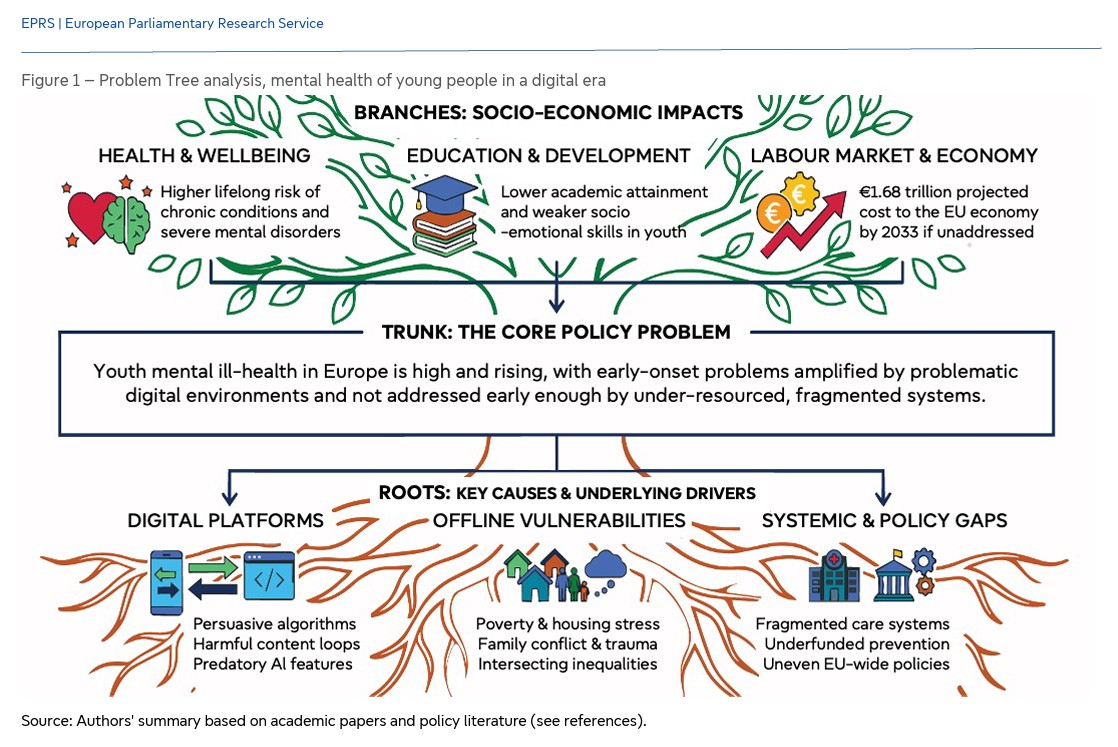
The report paints a worrying picture of the escalating pressures facing young people. Currently, almost one in five young people in the EU lives with a diagnosable mental disorder, with anxiety and depression leading the burden. Furthermore, adolescents are increasingly struggling with sub-clinical distress—such as sleep disruption and low self-esteem—exacerbated by the digital environment, including persuasive platform designs and algorithms that promote harmful content.

One of the most critical structural issues identified by the EPRS is the “missing middle”. Mental health systems across Europe are frequently structured to treat only acute, severe crises. This leaves a massive gap for adolescents experiencing mild-to-moderate psychological distress, who often languish on long waiting lists or receive no formal support until their condition deteriorates. The socioeconomic cost of ignoring this missing middle is staggering: if we maintain the current status quo, youth mental ill-health will cost the EU economy an estimated €1.68 trillion over the next decade.

Jigsaw’s approach: A blueprint for Europe

This is exactly the gap Jigsaw exists to fill, and we are immensely proud to see our work recognized as a “mature” and effective community intervention model at the European level. In its assessment of solutions, the report praises Jigsaw for providing an essential intermediate tier of early care.

The EPRS highlights our core model: providing free, brief, primary-care-level talking therapy designed to build coping skills and prevent early distress from becoming entrenched. Crucially, the report champions our low-threshold accessibility. By allowing young people aged 12-25 to self-refer—bypassing the need for a general practitioner referral—we remove massive administrative barriers and accelerate access to non-stigmatizing care.

We see the daily impact of this approach across our 14 regional services. It is incredibly validating to see the report cite our strong outcome data, noting that between 62% and 68% of Jigsaw participants show reliable and clinically significant improvements in their psychological distress. The report also emphasizes the strength of our multidisciplinary teams—which include psychologists, social workers, and youth workers—and our integration with local schools and primary care providers.

Moving forward with the recommendations

To turn the tide on this crisis, the EPRS report proposes six core EU-level policy options. Notably, Option 2 calls for a dedicated EU framework to support “youth-friendly early-intervention services” or youth hubs—directly mirroring the Jigsaw model. It recommends exactly what we have built: low-threshold access, multi-disciplinary care, and youth-centered environments.

We have long advocated that community-based, youth-friendly support should be the standard everywhere. This European recognition is a profound testament to the dedication of our staff and the young people who inspire us. Now, it is time to use this momentum to ensure that every young person in Ireland has a safe place to turn to when the digital and offline worlds become too much.

PRESS RELEASE: Record demand for Jigsaw services as youth mental health pressures intensify

Jigsaw, the National Centre for Youth Mental Health, has reported the highest level of demand for its services in a single month since the charity was established.

In October 2025, 1,243 young people sought support from Jigsaw, compared to the same month last year it represents a 24.3% increase.

Across the first ten months of 2025 (January to October), 9,059 young people have turned to Jigsaw for help, marking a 22.3% rise on the same period in 2024.

This follows on from record-breaking demand for youth mental health services with the charity in September. This means that the last two months have been the two highest demand months since the youth mental health charity was founded in 2006.

Jigsaw CEO Dr. Joseph Duffy said the figures paint a stark picture of the growing pressures on young people.

“We are seeing more and more young people reach out because they’re struggling to cope, and that should be of real concern for all of us,” said Dr. Duffy.

“We need to make sure that every young person in Ireland, has access to free, face-to-face mental health support when they need it.

“The recent budget saw a major investment in two new Jigsaw services. – Waterford, to serve the Southeast, and in Clare. These are an important step forward and I want to commend the Government for giving youth mental health provision greater priority but we need to ensure we have the resources to meet the rising demand in other parts of the country, so no one is left behind.

“This is a challenge for primary care providers, mental health charities, like Jigsaw, as well as policymakers.”

Jigsaw, which provides free, confidential mental health support to young people aged 12–25, operates 14 services across Ireland alongside online and school-based supports.

RESPONSE: Investing in early intervention supports for young people is essential – JIGSAW

Jigsaw welcome the statement issued today (February 5th, 2025) on the need for reform of mental healthcare in Ireland from John Farrelly, Chief Executive of the Mental Health Commission IRL, the regulator for mental health services in Ireland.

Commenting this morning in the Journal, Mr Farrelly calls on the government to move away from ‘short-term fixes’ and focus on building a ‘modern and accessible community mental health services that will become our first port of call if we are unwell’.

Dr Joseph Duffy, CEO of Jigsaw, responded:

“The comments from Mr Farrelly are timely and important as we start a national debate on how to support young people as a country. Sadly, the youth mental health crisis we are experiencing in Ireland today is a significant and growing issue. We must act now. Doing more of the same is no longer good enough. 

“Our current approach to mental healthcare in Ireland is not preventing preventable illness. We are allowing the number of more serious illness to grow and young people to fall through the gaps.

“Imagine if we treated heart disease the same way we treat youth mental health. Instead of encouraging healthy habits, regular check-ups, and early intervention, we’d wait until someone had a full-blown heart attack before offering treatment.

“We don’t wait for a heart attack to take heart health seriously—so why wait for a crisis to take youth mental health seriously?”

“We need more community mental health services for young people struggling with anxiety, depression, or stress, so we can reduce the number of lifelong mental health conditions, costly hospitalizations, and personal suffering. Early intervention when someone is suffering is key. ”

Who should design peer support for young people? Young people of course…

Getting mental health support from someone your own age, or who has dealt with something similar, can be effective.

Peer support is an approach that does just that.

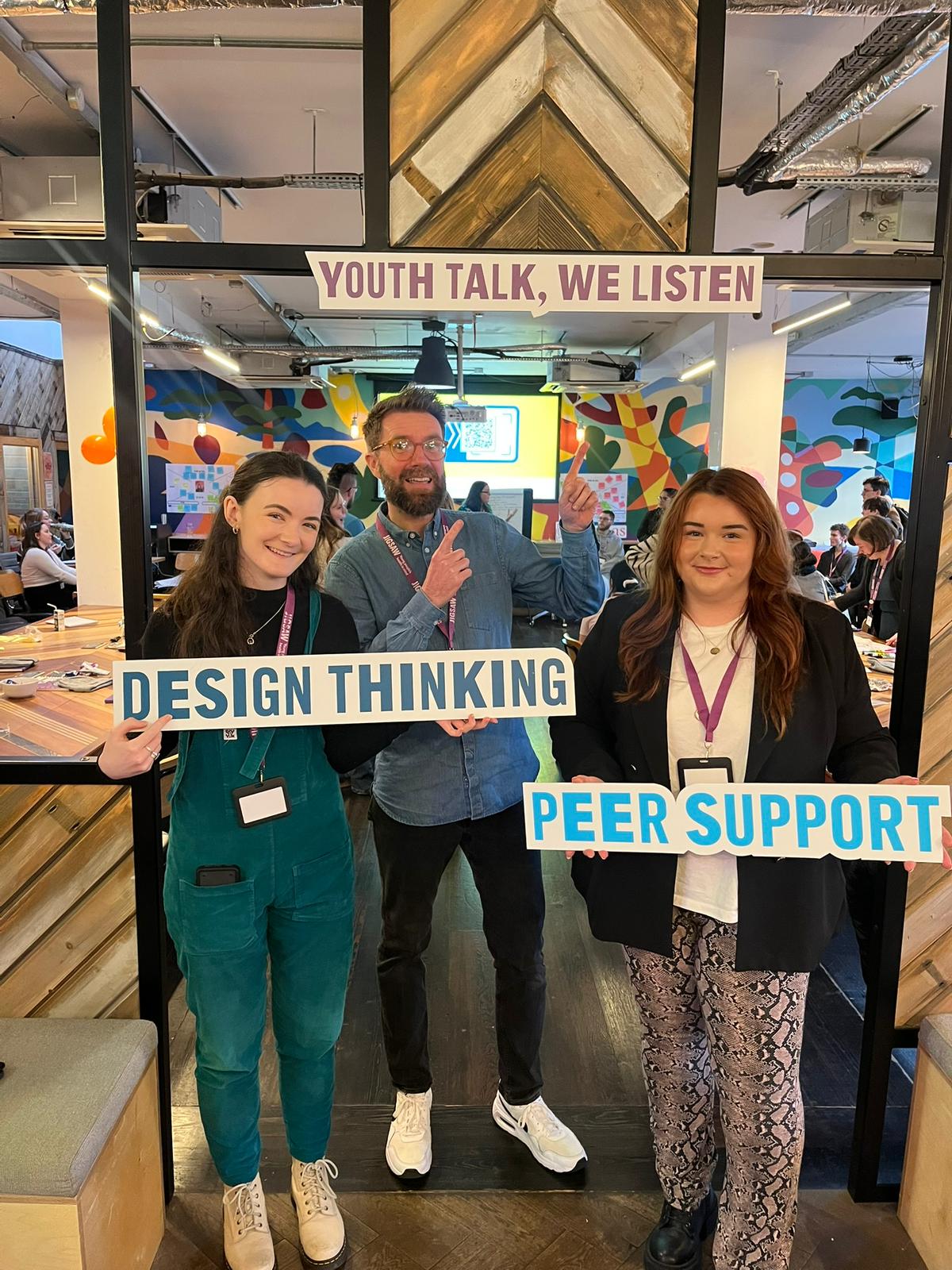
Last weekend 30 young people got together to help design a national peer support service for Jigsaw.

David Kavanagh, Jigsaw’s Youth Voice & Engagement Manager, explains:

“At Jigsaw, we firmly believe that young people should play a central role in shaping the mental health services designed to support them. Evidence consistently shows that co-producing mental health services with young people leads to more relevant, effective, and impactful care. Our Youth Talk, We Listen series is a testament to this belief, and we are thrilled to see it come to life.

“This past weekend marked the first event in this exciting series. The session focused on designing a national peer support service for Jigsaw, using the innovative design thinking methodologies led by Jess Hayden from The Brave Lab. With over 30 young people participating, the energy and creativity in the room were remarkable. Together, they explored what peer support could and should look like in a Youth Primary Care Mental Health Service.

“The outcomes of this session represent more than just ideas—they signify a meaningful step in shaping mental health care that is personal, impactful, and aligned with the needs of young people. This work also ties directly into the research of Rachel Murphy, a UCD PhD candidate, who is developing a programme theory for peer support in primary care youth mental health. It’s an exciting step forward in offering a more personal care model for young people across Ireland.

“A huge thank you to Tara Buildings in Dublin for hosting us in such an inspiring and welcoming space. Your support helped create an environment that fostered collaboration and innovation.

“We’re eagerly looking ahead to the next session in this series, where we’ll partner with our colleagues at the HSE to continue innovating. Stay tuned for more updates as we progress through this journey of co-creating a brighter future for youth mental health in Ireland.”

The session was made possible through Léargas funding via Erasmus+.


Back To Top